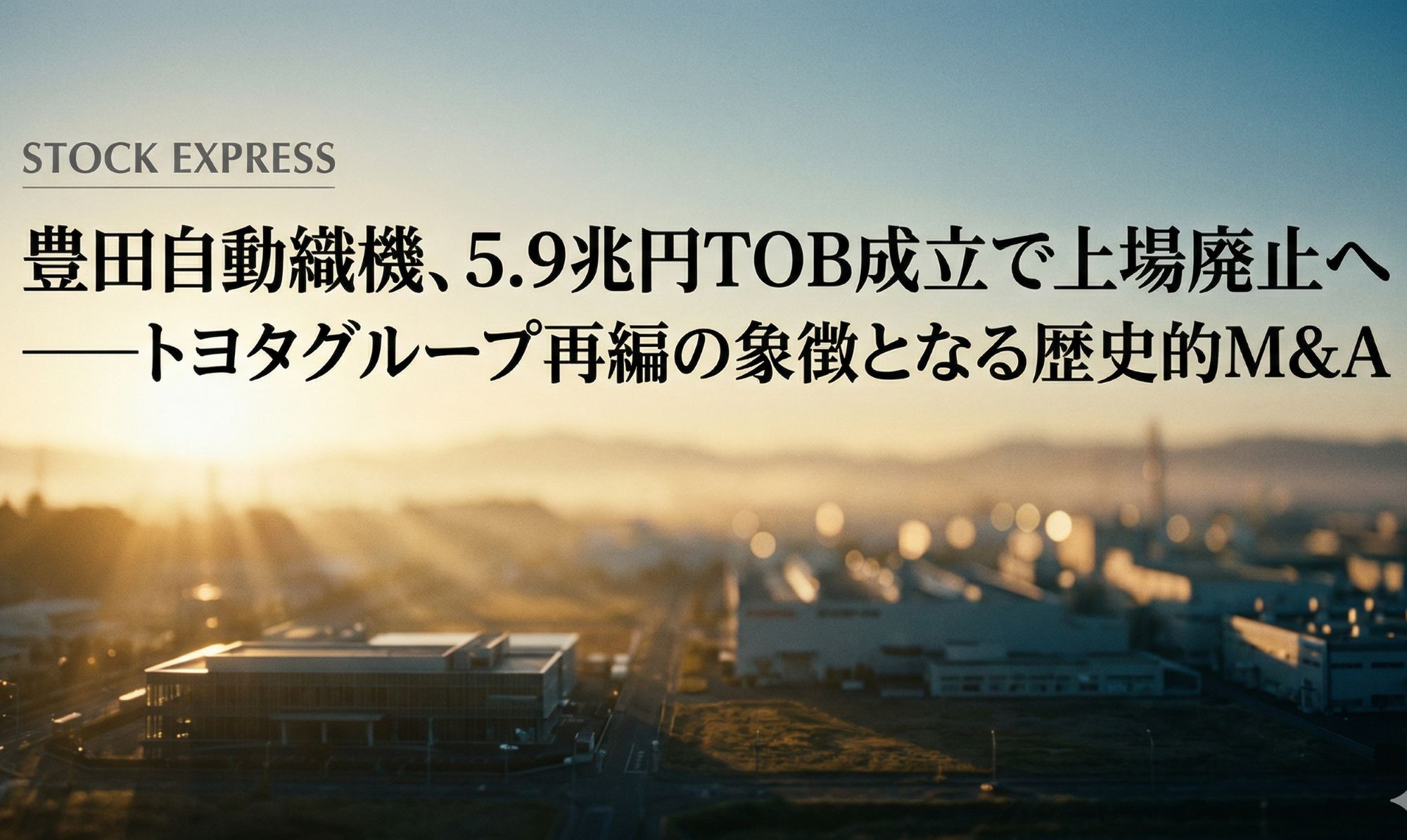
トヨタ自動車グループによる豊田自動織機(東証プライム 6201)の株式公開買い付け(TOB)が成立し、日本企業同士では過去最大となる約5.9兆円規模のM&Aが実現しました。これにより、トヨタグループの源流企業である豊田自動織機は上場廃止となり、日本の資本市場における大きな転換点として注目されています。以下にて詳しく見ていきましょう!!
過去最大の国内M&A、TOB成立のインパクト
今回のTOBでは、応募比率が63.6%に達し、成立条件である42.01%を大きく上回りました。買付価格も当初の1万6300円から2万600円へと引き上げられ、最終的にはアクティビスト株主も応じる形となりました。
買収後はトヨタ不動産が約99.5%、豊田章男会長が0.5%の議決権を保有し、トヨタ自動車は優先株を通じて資本参加する体制となります。これは経営陣主導のMBOではなく、グループ主導による再編型の非公開化と位置付けられます。
上場廃止の背景――資本効率と持ち合い解消
豊田自動織機はトヨタグループの「御三家」の一角であり、多数のグループ株式を保有する構造を持っていました。その結果、時価総額の約8割が保有株式で占められるなど、資本効率の低さが長年の課題とされてきました。
近年は海外アクティビストの圧力も強まり、持ち合い株式の解消や経営改革の必要性が高まっていました。今回の非公開化は、こうした構造問題を一気に解消する決断といえます。
今後はトヨタ、デンソー、アイシンなどとの持ち合い株も整理され、グループ全体の資本効率改善が進む見通しです。
非公開化で加速する長期投資戦略
上場廃止後の最大の狙いは、短期的な株価や市場評価に左右されない経営の実現です。
豊田自動織機はフォークリフトで世界シェア首位を誇り、売上の約7割を同事業が占めています。今後は物流分野のデジタルトランスフォーメーション(DX)や自動化技術への投資を強化し、長期的な競争力向上を図る方針です。
また、自動車関連ではトヨタ車の生産やエンジン製造も担っており、グループ内での役割再定義も進むとみられます。
投資家視点:市場から消える優良資産
今回の非公開化により、投資家はフォークリフト世界首位企業という優良資産への直接投資機会を失うことになります。
一方で、トヨタグループ全体としては、資本効率の改善や経営の柔軟性向上が期待され、間接的な価値創出が進む可能性があります。特にトヨタ本体や関連企業に対する評価見直しにつながるかが焦点となります。
トヨタグループ再編の本格始動
今回のTOBは単なる企業買収ではなく、トヨタグループ全体の資本構造改革の象徴的な一手です。
持ち合い解消、非公開化、長期投資への転換という流れは、日本企業のガバナンス改革の方向性とも重なります。今後、同様の再編が他の大企業グループにも波及する可能性があり、日本株市場全体への影響も無視できません。
投資家にとっては、個別銘柄の動きだけでなく、「資本効率重視への構造変化」という大きな潮流をどう捉えるかが問われています。
なお、本記事は、投資判断の参考情報として提供するものであり、特定の株式売買を推奨するものではありません。投資の最終ご判断はあくまで自己責任でお願いいたします。

STOCK EXPRESS車掌 SHUN
株主視点での経済ニュースサイト「STOCK EXPRESS」
ぜひ、ブックマークしてご購読くださいませ。
▼記事更新通知は 私のXにて♪
https://x.com/shun699
【Dear Overseas Investors: Summary in English】
Toyota Group Completes Record B Buyout of Toyota Industries, Marking Major Restructuring
Toyota Motor and its affiliated entities have successfully completed a ¥5.9 trillion ($39 billion) tender offer for Toyota Industries, paving the way for the company’s delisting in what marks the largest domestic M&A deal in Japan’s history.
Strategic Privatization to Improve Capital Efficiency
The buyout attracted strong shareholder participation, with over 63% of shares tendered. The move comes amid long-standing concerns over cross-shareholdings and inefficient capital structures within the Toyota Group.
By taking Toyota Industries private, the group aims to unwind complex equity ties and improve overall capital efficiency—an issue that has drawn increasing scrutiny from global investors and activist shareholders.
Ownership Structure and Governance Shift
Post-transaction, Toyota Fudosan will hold a dominant stake, while Chairman Akio Toyoda will retain a small ownership interest. Toyota Motor will support the company through non-voting preferred shares, signaling continued strategic alignment without direct control.
Focus on Long-Term Growth and Logistics Transformation
Privatization is expected to give Toyota Industries greater flexibility to pursue long-term investments, particularly in logistics, automation, and digital transformation. The company is a global leader in forklifts and plays a key role in Toyota’s manufacturing ecosystem.
Implications for Investors
While the delisting removes a high-quality industrial asset from public markets, it highlights a broader trend in Japan toward corporate restructuring and capital efficiency reforms.
For investors, the deal underscores a shift in Japanese corporate governance, with potential ripple effects across other large conglomerates.
–
Disclaimer: This article is provided for informational purposes only and should not be construed as a recommendation to buy or sell any specific securities. Please make investment decisions at your own discretion.




コメント